theology

The Westminster Confession of Faith

Westminster Confession Study Guide

Dive into this helpful study guide of the Westminster Confession of Faith, a foundational Reformed theological document written in 1646 that systematically addresses everything from Scripture’s authority to the final judgment. Created for leadership training at Grace Presbyterian Church, this guide distills all 33 chapters into an accessible paraphrase covering essential doctrines including God’s sovereignty, salvation through Christ alone, the sacraments, and the Christian life. Whether you’re preparing for church leadership or deepening your understanding of Reformed theology, this week-by-week breakdown makes one of Protestantism’s most important confessions remarkably approachable.
Westminster Confession Study Guide Read More »

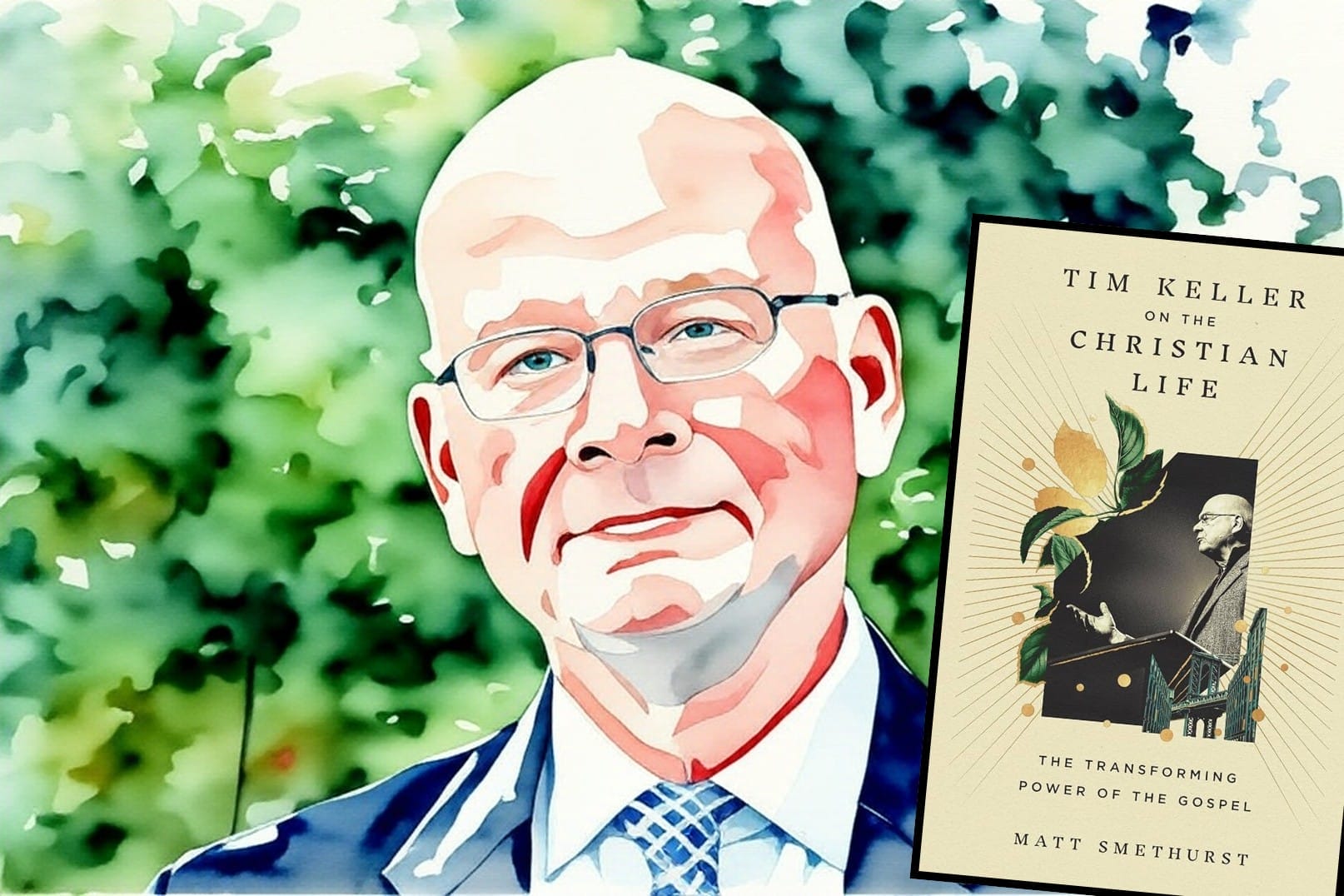
Tim Keller: Christian Life

Matt Smethurst’s “Tim Keller on the Christian Life” masterfully distills fifty years of Timothy Keller’s pastoral teaching into a single, accessible volume covering eight essential aspects of Christian discipleship. The book synthesizes Keller’s expansive work—spanning thousands of sermons and 25+ books — into practical guidance on topics ranging from Christ-centered Bible reading and understanding sin as disordered love, to work, relationships, justice, prayer, and suffering. This comprehensive yet approachable synthesis serves as an ideal entry point for those wanting to grasp Keller’s transformative vision of the gospel’s power without being overwhelmed by his vast body of work.

Tim Keller: Christian Life Read More »

St. Augustine at the museum. Scene 1

Augustine’s Political Philosophy Explains Our Political Chaos

St. Augustine’s political philosophy offers a surprising diagnosis for America’s polarization: our crisis stems from “disordered loves” – valuing the wrong things and treating politics as a religion that can save us. Augustine argued that nations are defined not by laws but by what they collectively love, and that without proper ordering of these desires toward truth and justice, governments become merely legitimized “gangs of robbers” driven by lust for domination. His solution isn’t withdrawal or despair, but “engaged pilgrimage” – working for provisional justice while recognizing that politics cannot provide ultimate meaning, freeing us from the rage and desperation that comes from expecting earthly systems to save us.

Augustine’s Political Philosophy Explains Our Political Chaos Read More »

Francis Grimké on the Christian Life – Book Review

Book review: Grimké on the Christian Life: Christian Vitality for the Church and World (Crossway, 2025), Drew Martin revives the legacy of Francis J. Grimké (1850-1937), a Presbyterian pastor born into slavery, NAACP co-founder, and Princeton Theological Seminary graduate. This entry in the “Theologians on the Christian Life” series transcends biography, offering a theological blueprint for bridging the false divide between doctrinal orthodoxy and social justice in today’s fractured church.

Accessible yet scholarly, Martin’s work quotes Grimké extensively, blending historical recovery with pastoral urgency. It challenges modern debates over Christian Nationalism and Critical Race Theory, urging a holistic faith that transforms souls and societies. Highly recommended for pastors, scholars, and lay believers navigating doctrine and justice in a post-2020 world, this book summons an old voice to heal new divisions: as Grimké urged, stop worrying about Christianity’s future and embody its instructions.

Francis Grimké on the Christian Life – Book Review Read More »

City of God: Book 2 – Podcast

This podcast episode from “Ancient Ideas” explores Book 2 of Augustine’s City of God, where Augustine shifts from defending Christianity against blame for Rome’s sack to launching a powerful counterattack against pagan religion. Augustine argues that Rome’s true downfall wasn’t physical destruction but moral corruption fostered by the gods themselves, using Roman theater and historians like Sallust as evidence that the empire was spiritually rotting long before any military defeat. The episode concludes with Augustine’s invitation to Romans to abandon their “malignant” gods and join the eternal City of God, where true justice and holiness reign.

City of God: Book 2 – Podcast Read More »

City of God: Book 1 – Podcast

This morning, I used GenSpark.ai to analyze and discuss book one from St. Augustine’s City of God. I was pleasantly surprised by the quality of the audio it produced. I uploaded a PDF copy of the introduction and book one, and a few minutes later I was able to download the podcast. What follows is an unedited audio message and transcript generated by GenSpark AI. You will hear two people discussing book one from St. Augustine’s City of God.

City of God: Book 1 – Podcast Read More »

Frank Zappa Translation of Augustine’s City of God

In a bold mashup, St. Augustine’s The City of God, written between 413-426 AD to defend Christians against pagan critics after Rome’s fall, gets a modern twist through the satirical lens of Frank Zappa, the musical maverick known for blending rock, jazz, and avant-garde sounds to mock popular culture. This imaginative fusion pairs Augustine’s rhetorical brilliance and theological depth with Zappa’s eclectic, boundary-pushing style, creating a “Zappa-fied” introduction to inspire new readers to tackle the 1136-page classic. With AI-generated art and a funky vibe, this teaser barely scratches the surface but serves up Augustine’s cosmic symphony with a side of Zappa’s funky flair.

Frank Zappa Translation of Augustine’s City of God Read More »

Scroll to Top